No 13D

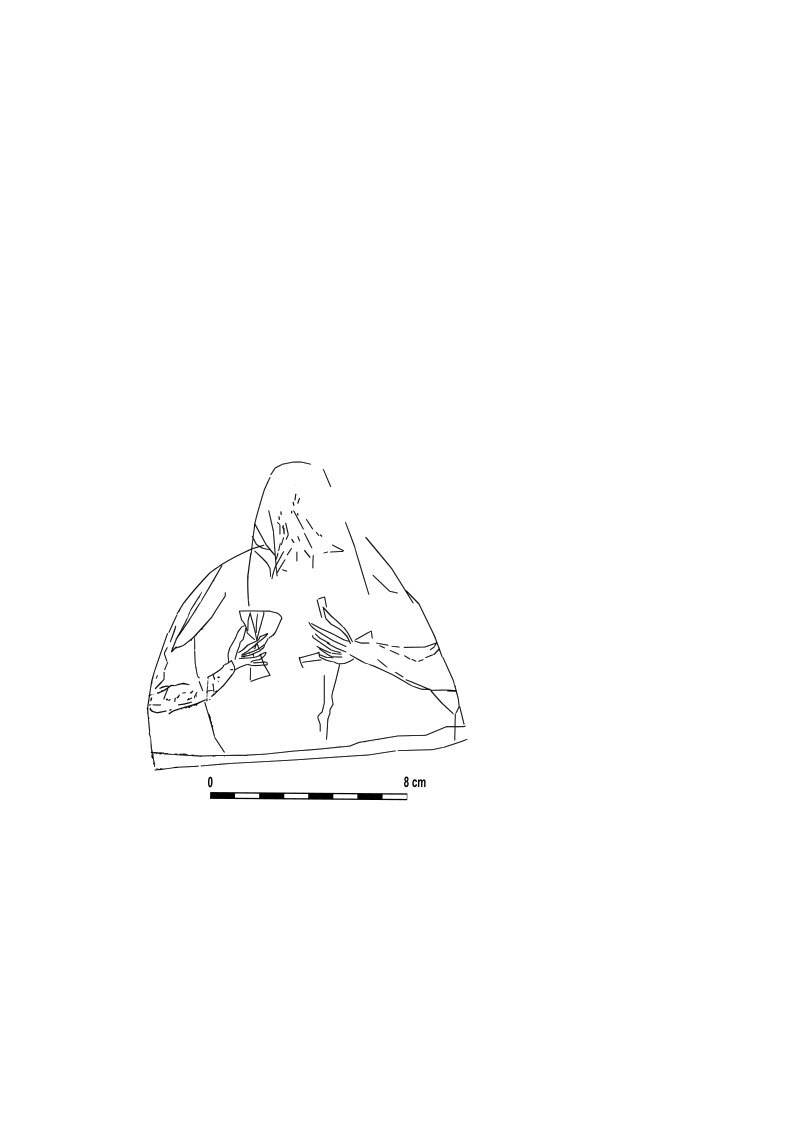
Location: On the southern wall of the northeastern pier in the northern gallery.
Material: Marble surface, 6th century.
Dimensions: Height 10.5 cm, width 12.5 cm, at eye level.
Condition: Shallow, on place illegible carvings, intersected by other marks.
Technique: Incised.
Description: Contour drawing of a schematic, waist-length human figure. The head is abstractly defined, lacking detailed facial features. The composition is defined by the ritual objects held in each hand: a cup is cradled in the left arm, while the right hand holds a cross.
Attribution: A Clergyman with Eucharistic Vessels.
Publications: none.
Commentary: The attributes held by the figure identify the scene as a symbolic representation of the Great Entrance in the Byzantine Eucharistic liturgy. This was the solemn procession transferring the Holy Gifts (bread and wine) to the altar.
The chalice (potir) held in the left hand directly references this liturgical act. The cross held prominently in the right hand serves as a profound theological statement, visually uniting the Eucharistic sacrifice with Christ's Crucifixion. This combination transforms the image from a simple ritual scene into a doctrinal illustration, emphasizing that the Eucharist is the living re-presentation of Christ's unique sacrifice. This graffito stands as a significant eyewitness testament to the deep interconnection of liturgy, art, and theology in medieval Orthodox culture.
Date: Unknown.