No 1G
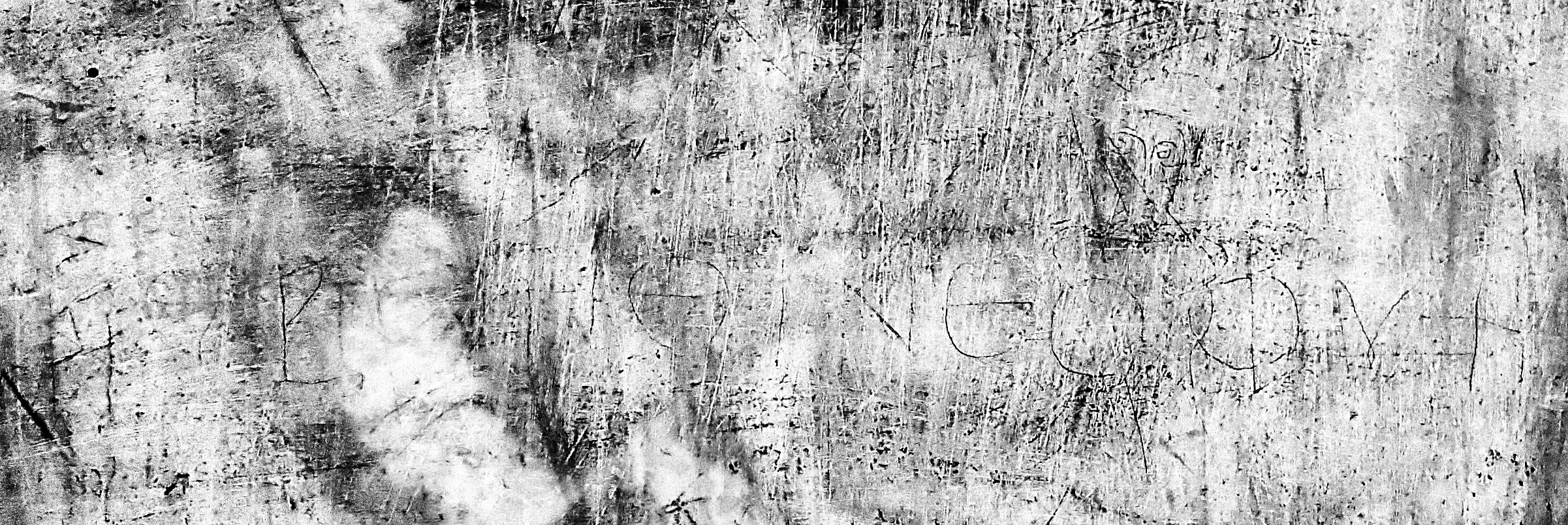
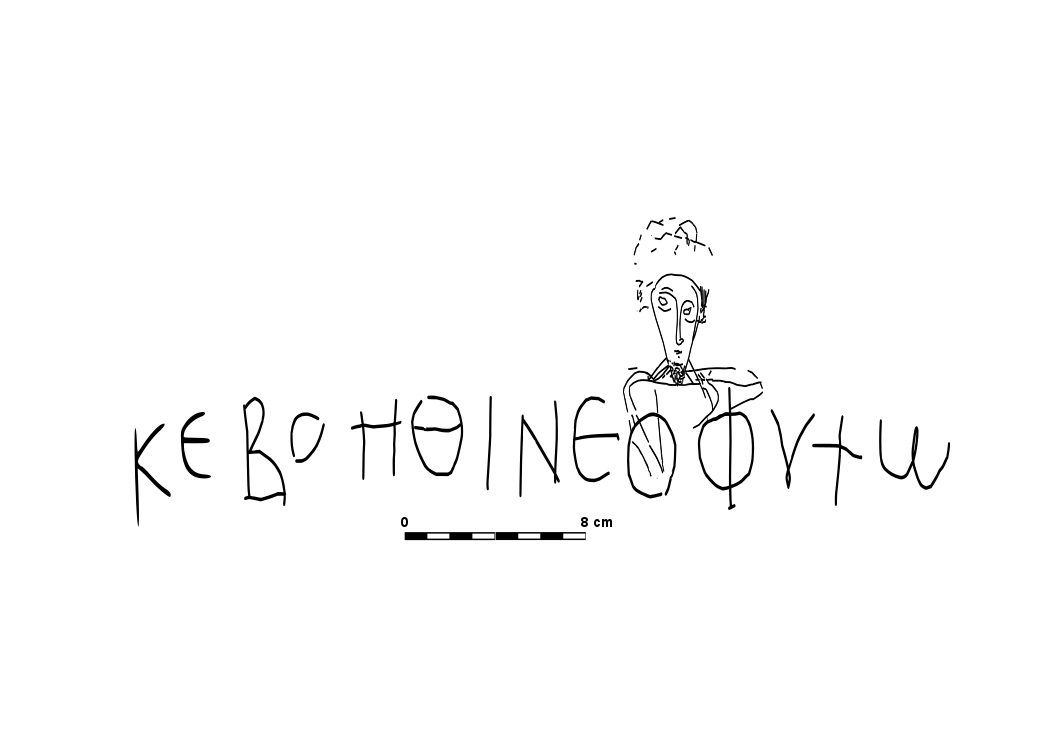
Location: On the west wall of the south-east pylon.
Material: Marble surface, 6th century.
Dimensions: One-line inscription, 36 cm long. The letters vary in height, ranging from 5.5 cm (φ) to 2 cm (o₄). The drawing measures 11 cm in height by 6 cm in width and is situated at eye level.
Condition: Lightly incised but clearly legible letters and drawing.
Technique: Incised.
Language: Greek.
Scripture: Greek.
Text: ΚΕ ΒΟΗΘΙ ΝΕΟΦΥΤω
Restored text: Κ(ύρι)ε βοήθει νεοφύτω
Translation: Lord, help the neophyte
Attribution: Autograph inscription with prayer addition
Announcement: Evdokimova, A. Grečeskie graffiti iz sobora Sofii konstantinopolʹskoj (predvaritelʹnye zamečanija), v: Indoevropejskoe jazykoznanie i klassičeskaja filologija, XV. Materialy čtenij, posvjaŝennyh pamjati professora Iosifa Moiseeviča Tronskogo 20–22 ijunja 2011 g. Sankt-Peterburg, 2011, 160.
Publications: none.
Commentary: The graffito consists of a Greek inscription in large, carefully incised majuscule letters, accompanied by a schematic human face and bust. The accompanying bust shows an elongated head, large eyes, a small nose, and schematic hair or headdress, likely sketched by a non-specialist hand. The presence of both text and a human figure indicates a more personal expression of devotion, possibly a pilgrim’s or cleric’s mark inside Hagia Sophia. The figure could represent a simplified self-portrait accompanying a prayer inscription. The text appears to be part of a supplicatory or dedicatory formula.
Palaeography The letter ε is lunate, while the υ is a majuscule and the ω a minuscule. Both the υ and ω feature decorative loops at their stroke intersection. The asymmetrical letter K has a shortened upper section and consists of two connected strokes where both the upper and lower bars touch the vertical left stem, although the lower bar projects above the baseline. The letter tau (τ) has a vertical stem that is set slightly higher than its crossbar. The letters phi (φ) and theta (θ) have large, almost rounded bowls.
Orthography: The verb βοήθει exhibits iotacism, with an ι (iota) used in place of the standard ει (epsilon-iota) diphthong.
Date: Uncertain.